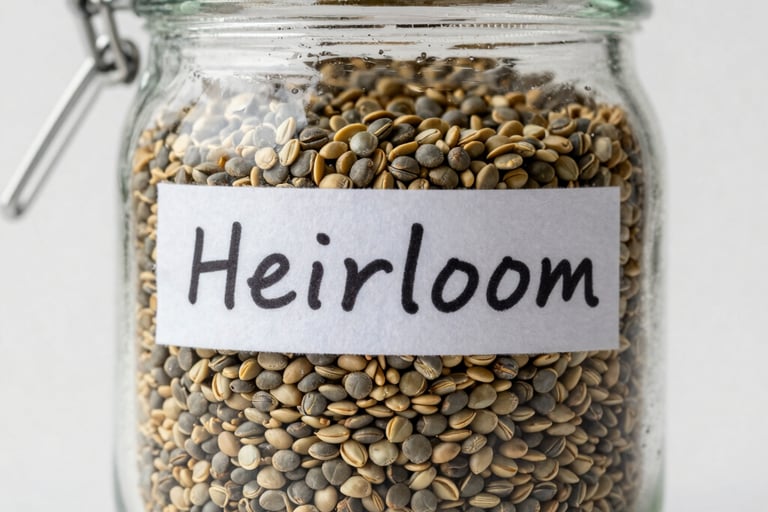
Walk down any supermarket aisle and you will find tomatoes engineered to survive thousands of miles in a refrigerated truck. These modern hybrids look perfect on the outside, but they have sacrificed their complex organic chemistry and cellular nutrition for physical durability. Planting heirloom seeds is an act of reclaiming true culinary depth and evolutionary hardiness.
The Genetic Heritage in Your Backyard
Unhybridized seeds carry open-pollinated traits that have been carefully adapted to specific regions over hundreds of generations. These plants have developed natural defenses against pests and shifting weather patterns without the need for chemical intervention. When you save seeds from your best-performing crops, you are active in localized, natural selection.
Unlocking Complex Phytonutrient Profiles
Heirloom varieties like Cherokee Purple tomatoes or Lacinato kale contain higher concentrations of antioxidants and bitter compounds than their supermarket cousins. These bitter notes are not a flaw; they are the exact chemical signals that stimulate human digestive enzymes. By introducing these ancient genetics back into your diet, you stimulate a more robust digestive response.
How to Start Saving Seeds
Begin with self-pollinating crops like beans, peas, or lettuce, which rarely cross-pollinate with other varieties in the garden. Allow a few of your healthiest plants to mature fully past the eating stage so their seed pods can dry directly on the vine. Harvest them on a dry afternoon, store them in labeled paper envelopes, and keep them in a cool, dark place for next spring.